Creating Value Propositions That Sell

Friday, November 12, 2010 Posted by John Tabita 1 comments

In a SpongeBob SquarePants episode, Mr. Krabs sees a group of tourists outside his restaurant, the Krusty Krab. With dollar signs in his eyes, he hurries out to entice them inside. As they scurry past, he shouts:

“Don’t you want to give me your money?”

Needless to say, they continue on without giving him so much as a moment’s notice.

Whether it’s busy tourists or busy decision makers, no one cares about what you want or what you’re selling. That’s where a strong value proposition comes to the rescue. Jill Konrath, author of Selling to Big Companies, defines a value proposition as:

...a clear statement about the tangible business results customers get from using your product, service or solution.

She goes on to say that a strong value proposition “always includes movement,” and describes that as:

increasecutimprovesavefree uprevitalize
acceleratereduceenhancesqueezeeliminateshrink
strengthen improvegrowbalanceminimizemaximize

So what types of things can you increase, enhance, shrink, improve or revitalize? That depends on what you’re selling, and to whom. Since my company sells advertising, we can increase, improve, strengthen and grow things like:

  • revenue, profit, sales
  • prospects, leads, customers
  • customer base, market share
  • return on advertising investment

So a “winning value proposition” for us could be:

We help businesses acquire new customers and increase their market share, without wasting money on advertising that doesn’t work.

Once you’ve created a strong value proposition, use it in your phone calls, emails and voice mails, in your print and web copy, and at your networking meetings. Go ahead, you give it a try.
Labels:

Can You Hear Me? Over...

Tuesday, October 26, 2010 Posted by John Tabita 0 comments

Technology is wonderful… except, of course, when it’s not. Like when my parents have something “really important” to tell us... and they call our house phone, my cell phone and my wife’s cell phone… all in a matter of minutes. (We love you, Mom and Dad, really.)

Or like the time the scoutmaster needed a permission slip for my son’s upcoming campout. He sent me a private Facebook message. Unfortunately, I hadn’t been on Facebook for several days and showed up to the meeting without the slip.

New technologies often replace older technologies. (Do you remember floppy discs? No, neither do I.) But oftentimes, new technologies merely supplement an existing one. Friends and family now have several options to communicate with me: They can call my cell phone or my landline, email me, text me, send me a private Facebook message, or post something on my Facebook wall.

It’s no different in the business world. No one is disconnecting their fax or phone line because they now have corporate email. But many companies have decided to stop all their traditional advertising because of this thing called “The Internet.” But is that really the wisest thing to do?

Recently, I needed a new printer, so I began looking at the wireless all-in-one printer/scanner/copiers on the market. My hot button was the high ink cost and the fact that most printer manufacturers combine the cyan, magenta and yellow ink into a single cartridge, forcing me to throw it out when only one color runs out. So I wanted one with four separate ink cartridges and a low cost-per-page.

I decided to research the two brands I’m most familiar with – Epson and H.P. After doing several searches on both brands and discovering that there are far too many printer models (and even more consumer opinions on each of them), I needed a YouTube break. As I’m watching a favorite video, suddenly an inkjet printer ad pops up at the bottom. Coincidence? I think not.

Later that night, a television commercial for Lexmark inkjet printers interrupts my regularly-scheduled viewing. Lexmark, it seems, claims to be one of the most ink-efficient printers on the market. So off to my computer I go for more research.

What finally completed the buying cycle for me was CNET, where I read both professional and consumer reviews on the various printer models. Yes, I did all my research online (and even made my purchase online), but it was good ol’ fashioned television advertising that got me to buy a brand I wasn’t even considering.

Advertising channels are becoming more and more fragmented, so it’s no longer possible to reach a mass market. Smart marketers are taking advantage of every advertising channel that will generate a lead. And something it takes all of them working together to generate a single sale.

As I said before, your all of your marketing should work together as a team. Pick the best players (i.e., advertising mediums and marketing methods) for your type of business, then work them to generate that one sale. And then the next one. And so on...
Labels:

Yellow Page Advertising, Part 5: Google Search vs. Internet Yellow Pages

Monday, October 4, 2010 Posted by John Tabita 0 comments

I always find it interesting (and refreshing) when a search marketing company has something positive to say about the Yellow Pages. As someone who ran a web development business for over 5 years, I can certainly understand their bias. But it seems that the folks over at Search Engine People have decided to go with the facts rather than anecdotal evidence regarding the effectiveness of Yellow Page advertising.

Blogging on this topic, Tom Tsinas looked at one of his client’s year-to-date website analytics. Comparing the number of visits that came from Google to those that came from Internet Yellow Page (IYP) sites like Superpages, he found that, overwhelmingly, Google won for sheer volume of traffic: 5,504 to 1,261.

But digging deeper, he found something interesting about the quality of traffic that came from the Internet Yellow Page sites.

He found that the bounce rate (i.e., number of initial visitors who “bounce” away to a different site, rather than continue on to other pages within the site) was much higher with the Google visitors: 55.04 percent compared to 27.07 percent. He also found that the IYP visitors spent more time on the site, visited more pages, and that almost all of them were new visitors to the site. His conclusion?

Clearly Yellow Page visitors are more engaged than Google’s. They also 100% less likely to bounce, view 20% more pages, spend 12% more time on the site and, with almost 90% of the traffic being from people who’d never been to the site, reach a different audience!

Regarding the quality vs. quantity of traffic, Dick Larkin of WebListic, Inc., an Internet marketing firm, puts it like this:

...there are more searches on Google in a few days than there are in all the IYPs combined for a year. However, the QUALITY of users on IYPs is much higher than of general web search. I define quality as how close the searcher is to making a buying decision.

See, it’s easy to fire off a few hundred searches on Google before taking any action. However, on a typical Internet Yellow Pages, you have to enter multiple pieces of information (keywords, location, state, etc.) which is more time consuming, and also filters out searchers who aren’t really interested in finding a local business.

Someone searches an IYP when they’re serious about local information.

This makes sense. A large percentage of people using search engines like Google are likely to be in research mode rather than buying mode. But people who use Internet Yellow Pages have already decided to buy and are merely looking for a local merchant from whom to buy. In a joint study, TMP Directional Marketing and comScore found that IYP sites such as Superpages.com and Yellowpages.com account for 60 percent of local IYP business searches, while sites such as Google Maps, MapQuest, Yahoo! Local account for 40 percent of local IYP business searches.

This demonstrates that, when searching for local information, people tend to use IYP Yellow Pages more than search engines, making it a viable tool to reach consumers who have already made a buying decision. In a business climate where targeting the right consumer is mission critical, I ask: How much more targeted can you get than “ready to buy”?
Labels:

Free Air Guitars

Wednesday, September 22, 2010 Posted by John Tabita 0 comments

Photo by sepultura

Looks like 96.3 Rock Radio is running a free air guitar promotion. Get yours while you can!
Labels:

“I’ll Start Advertising Again when Business Picks Up...”

Tuesday, September 14, 2010 Posted by John Tabita 0 comments

That was an actual response heard by one of my appointment setters.

Why is it that no one says things like, “I'll pay my phone bill again when business picks up,” or “I’ll pay my electric bill once business picks up”? How do you expect business to “pick up” if you don’t advertise?

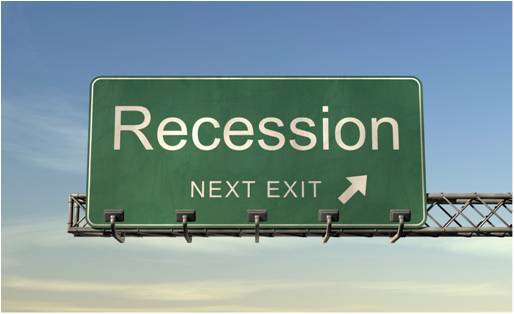
I’ve said it before and I’ll say it again: A recession is the best time to advertise, because most of your competition is cutting back on theirs.

It’s the perfect opportunity to steal their customers.

You see, the average business owner tends to think that, in a recession, no one is buying; so if no one’s buying, why advertise?

That would make sense, if it were true. But the reality is, people are buying, you’re just competing for a smaller pool of buyers. (In fact, a recent study shows that 24 percent of consumers made only minor cutbacks to their spending during this economic downturn.) Only the businesses that continue to advertise will have access to the larger percentage of consumers that did adjust their spending habits.

Since you need to compete even harder for customers, don’t just keep doing what you’ve been doing otherwise, you’ll just get more of the same. Instead, figure out what will get customers to buy from you. Just advertising in itself will not do the trick. You’ve got to advertise better. In a recession, consumers become more value-oriented. So what can you do to create more value for your customers, so that they’ll remain loyal customers?

For example, in a recession, over 80 percent of consumers surveyed say they think it’s a smart idea to pay for everything with cash, debit cards, and checks. So how about offering a discount to these customers?

That’s just one idea. The important thing you need to know is, how does the consumer’s buying habits change when the economy is down? That knowledge is power.. but only if you act on it.

Need somewhere to start? The folks at mNovack Design have written a book “to inspire intelligent recessionary marketing.” You can order a free copy, or download the pdf.

Yellow Page Advertising, Part 4: Return on Investment

Friday, September 10, 2010 Posted by John Tabita 1 comments

Anyone who’s read a business book or gone to college should know ROI is a number derived from a simple mathematical formula.

Ian Sohn over at Flagged For Follow Up made that statement on a blog post about ROI. He’s absolutely right. Here’s a simple mathematical formula:

1. How much revenue do you want your advertising to generate each month?
    Pick a realistic number. In my hypothetical example, I’ll use...

      $5,000

2. What is your average sale?
    If you have multiple products, think about what your average customer spends.

      $1,000

3. [Now divide $1,000 into $5,000.] The number of sales you need is:

      5 sales

4. How many prospects must you speak with to make 1 sale?

      6 prospects

5. [Now multiply 5 sales x 6 prospects.] The number of calls you need is:

      35 calls

So to sum it up, 35 calls a month would result in 5 sales and bring in $5,000 a month.

This is an example of what a transmission shop could expect from Yellow Page advertising.

Remember in my previous post that I said you could get significant advertising in many independent directories for less than $3,000 a year? Spending $3,000 a year to get $5,000 a month x 12 (i.e., $60,000) is a 20:1 return on your investment.

And they say Yellow Page advertising doesn’t work...

Yellow Page Advertising, Part 3: Too Expensive?

Thursday, September 2, 2010 Posted by John Tabita 0 comments

I’ve been told by older reps how sweet it was to sell Yellow Page advertising “back in the day” (that being when phone companies had a monopoly on Yellow Pages). They tell me the typical sales pitch went something like this:

I’m here to sell you Yellow Page advertising. Oh, youre not interested? Well, you will be. Here’s my card; call me when you change your mind. Oh... and the book’s closing in 2 weeks.

That’s how first half of their day was spent. The second half usually involved golf...

Those days are gone forever, mainly because the deregulation of the Telecom industry allowed for smaller, independent Yellow Page companies to publish directories of their own. Competition has forced rates to come down. As a result, companies like AT&T and Verizon can no longer charge the exorbitant prices they once did. And the independent publishers’ rates are even more affordable. (You could spend less than $3,000 and get display advertising in multiple headings for an entire year.)

Of course, any advertising is “too expensive” if it doesn’t work. And by “doesn’t work” I mean that you paid more money for your advertising than you got back in return.

So any discussion of advertising must include Return on Investment. And that’s the topic of my next post.